
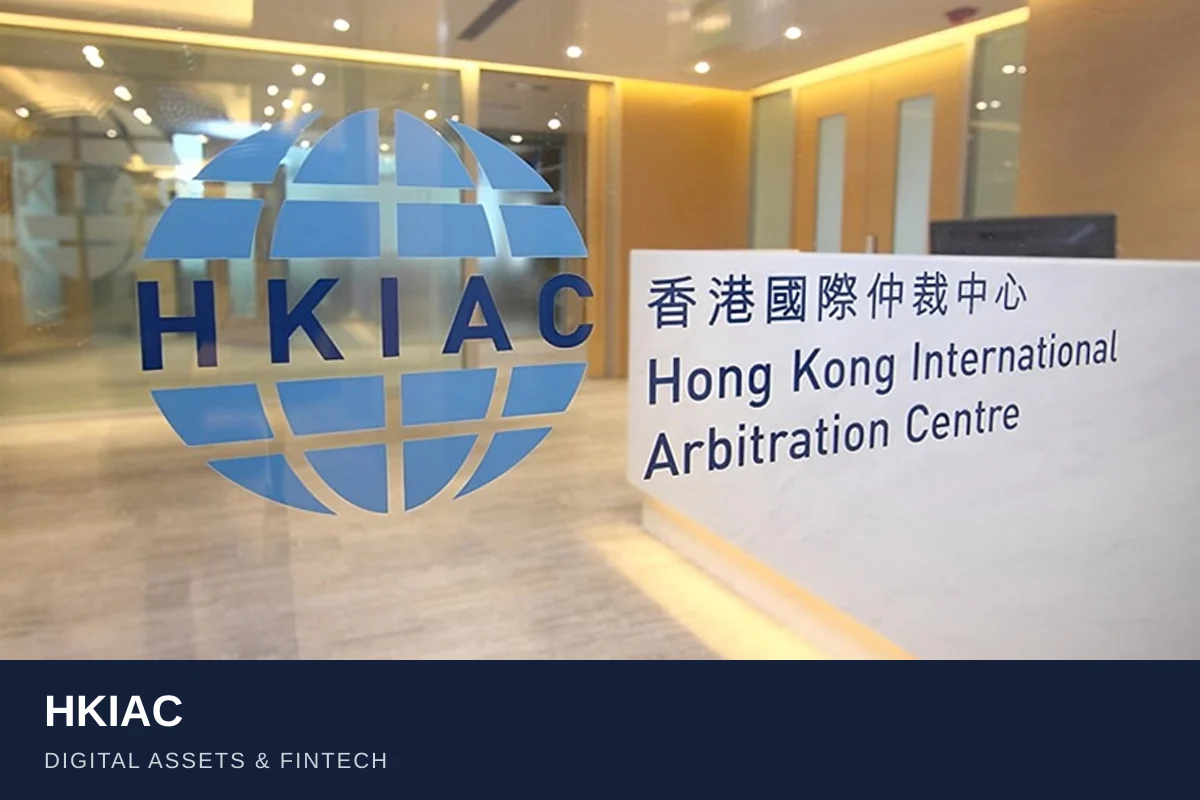
The Hong Kong International Arbitration Centre has announced a Panel of Arbitrators for Digital Assets and Fintech Disputes, responding to what it describes as a growing caseload involving digital assets. The initiative was reported on 4 November 2026 and confirmed on HKIAC’s official LinkedIn page.
The panel is intended to bring together practitioners with substantial experience in digital assets, blockchain or fintech, including cryptocurrency disputes. For businesses, the development is about access to suitable decision-makers: someone who can follow the technology while applying the contract, evidence and relevant law.
A specialist pool, with party choice preserved
The announcement expressly preserves the ability of parties, co-arbitrators and HKIAC to designate or appoint people from outside the panel. Inclusion is therefore not a compulsory gateway to every appointment involving digital assets.
Nor does the announcement introduce a separate procedural code for cryptocurrency claims. A panel identifies potential arbitrators. The arbitration agreement, applicable rules and law continue to determine the framework within which a particular dispute can be heard.
This distinction is useful when drafting contracts. Naming an institution or choosing its rules is different from specifying qualifications for a tribunal. A commercial team should make those choices deliberately, rather than assume that the existence of a specialist list writes the dispute clause for it.
Why technical understanding can matter
Consider a hypothetical dispute between a customer and a digital-asset custodian. The parties may disagree about a withdrawal instruction, who controlled a private key, the meaning of a transaction record or the allocation of responsibility under the service agreement.
A tribunal needs to distinguish those questions. A visible on-chain transfer does not, without further analysis, establish who legally authorised it or which contractual duties were owed. Equally, a contractual promise may require technical evidence before the tribunal can decide whether it was performed.
Specialist familiarity can help a tribunal ask focused questions and understand expert evidence. It does not dispense with evidence, guarantee the outcome or make every technical proposition common knowledge. The parties still need a fair opportunity to explain and challenge the material on which the decision will rest.
What applicants need to demonstrate
The published call combines HKIAC’s general List of Arbitrators admission requirements with evidence of relevant subject-matter work. Its stated general criteria include at least five years’ full-time arbitration experience or equivalent, two drafted awards or permitted substitute arbitration documents, and two written references.
Applicants must also supply an anonymised record of digital-assets, blockchain or fintech disputes they have handled, identifying the nature and size of the matters and their role. Additional specialist credentials or related materials may be supplied. Existing HKIAC Panel or List members need not resubmit the first three general items.
For the initial list, applications are due on or before 31 December 2026 to hkiac_arbitrators@hkiac.org, clearly identifying the specialist panel. Applicants should consult the original announcement before submitting; meeting stated criteria is not a promise of admission.
The practical questions remain case-specific
The initiative should prompt parties to think beyond the label “crypto expertise”. The experience needed for a custody or platform dispute may differ from that needed for a software-development agreement, a financing arrangement or a disagreement between business partners.
Other appointment questions remain important: independence, conflicts, language, availability, the scale of the case and procedural judgement. A strong subject-matter fit does not make these considerations disappear.
Likewise, arbitration cannot resolve every practical recovery problem merely because a specialist is appointed. Parties should assess consent to arbitrate, the identity of the respondent, the relief sought and the likely enforcement location. These observations are practical editorial analysis, not additional requirements announced by HKIAC.
What to watch
The next useful development will be the composition of the initial panel and the range of experience represented. For now, the news is an institutional response to a specialist demand: a more visible pool of potential arbitrators, while retaining the flexibility to appoint elsewhere.
Published 5 November 2026. Announcement reported 4 November 2026. HKIAC’s primary website could not be independently fetched during preparation; the launch was checked against its official LinkedIn announcement and the reproduced institutional press release.
Go to the source.
- HKIAC: official announcement and application details
- HKIAC’s official LinkedIn page: announcement of the specialist panel
- HKIAC press release reproduced by Conventus Law, 4 November 2026
- LexisNexis: announcement date and initial application deadline
- Office photograph source: Radio Free Asia, 17 December 2024