An oil spill, then a dispute over the insurance
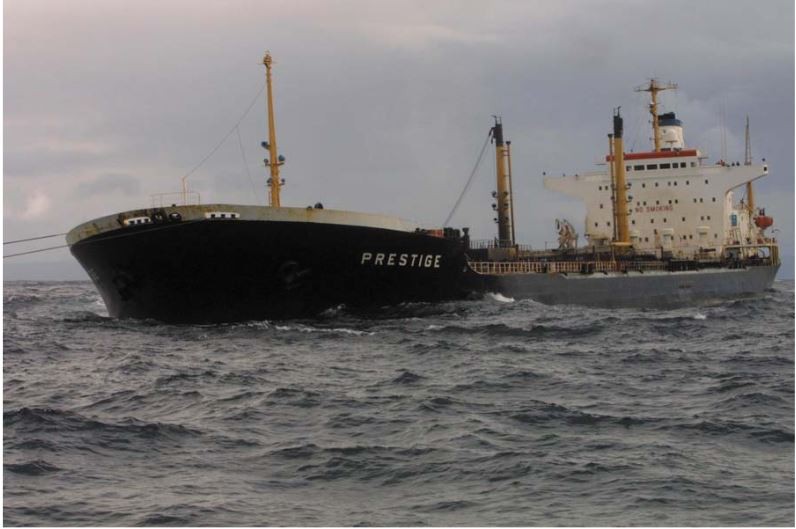
In November 2002, the Prestige sank off the Spanish coast. Pollution reached Spain and France, and the two States sought compensation from the ship’s insurer, the London P&I Club. Their claims were brought under Spanish legislation allowing an injured party to proceed directly against the insurer.
The insurance policy contained conditions. Disputes were to go to London arbitration under English law. It also contained a “pay to be paid” provision: the shipowner had to discharge its liability before the insurer was required to reimburse it. The owners had not paid.
That produced two different routes through the dispute. The States pursued recovery in Spain. The insurer relied on the policy’s terms in London arbitration. The question eventually reaching the Supreme Court was whether compensation could be awarded for the States’ breach of their obligation to arbitrate.
Why a party that did not sign can still have to arbitrate
Spain and France were not original parties to the insurance contract. That did not resolve the matter. Their claims against the Club depended on the policy’s cover.
Applying English law, the Court treated the direct-action right as contractual in substance. The conditional benefit principle meant that a third party exercising the contractual right had to accept the terms relevant to its exercise. Here, those terms included the arbitration clause.
The point is narrower than saying that every third party is bound by every arbitration agreement. It concerns a claimant seeking the benefit of particular contractual rights. The source of those rights, the applicable law and the terms attached to them remain essential to the analysis.
The awards survived; their legal basis needed correcting
The arbitrators had described the remedy as equitable compensation for breach of an equitable obligation to arbitrate. The Supreme Court rejected that description. The obligation was contractual, and the remedy was ordinary damages for breach of contract.
That correction did not require the compensation awards to be abandoned. The Court upheld the result, with changes to the awards’ wording to reflect the proper legal basis. This was a decision about the nature of the obligation and the remedy, rather than permission to disregard the distinction between legal and equitable relief.
State immunity drew a boundary between remedies
An injunction would have required the States to stop pursuing the foreign proceedings. Section 13(2)(a) of the State Immunity Act 1978 prevented that relief in the absence of the necessary written consent. Payment in lieu of an injunction was also unavailable here.
Damages for a breach already committed were different. They compensate for the consequences of breaking an existing obligation; they do not directly tell a State how to conduct future proceedings.
The timing point is easy to miss. Loss may arise in the future from a breach that has already occurred. That is not the same as awarding common-law damages merely because a future breach is threatened. The judgment preserves that distinction.
A section 69 appeal has limits
The Supreme Court also addressed the scope of an appeal on a question of law under section 69 of the Arbitration Act 1996. Such an appeal is not an unrestricted opportunity to reconsider the dispute.
Parts of the Court of Appeal’s reasoning had gone beyond the questions properly within the permitted appeals. Arguments about causation and interference with foreign courts could not supply a new route to setting the awards aside in those circumstances.
For parties and counsel, the practical lesson is to identify the precise question of law and the boundaries of the permission granted. A persuasive argument on the wider dispute does not automatically become an argument the appellate court is entitled to decide.
The point to take away
An arbitration clause can have consequences beyond an order directing parties to arbitrate. In this case, pursuing contractual benefits through a different forum exposed the claimants to damages for breach of the arbitration obligation.
The judgment does not remove the need to examine the governing law, the basis of the third-party claim or the available remedies against a State. It explains why those questions must be kept distinct. The decision was handed down on 28 October 2026.